

The Polar Jet Stream is a powerful river of air high in the atmosphere that acts as a guiding mechanism for weather patterns across the Northern Hemisphere. Its behavior is intricately linked to climatic shifts and has significant implications for understanding the chaos that ensues due to global warming. By examining the polar jet stream’s dynamics and its vulnerabilities, one can glean insights into the erratic weather phenomena observed in recent years.
The polar jet stream is primarily driven by the temperature gradient between the polar and equatorial regions. As the planet warms, this gradient is altered, leading to changes in the jet stream’s trajectory and intensity. The decreased temperature differential results in a weakened jet stream, characterized by slower, meandering patterns rather than rapid, linear flows. Such alterations can lead to prolonged weather events, including heatwaves, heavy rainfall, and extreme cold spells, which are all manifestations of a disrupted climate system.
To comprehend the implications of a weakened polar jet stream, one must first delve into its structure and function. The jet stream operates at altitudes of around 30,000 feet and can reach speeds of over 200 miles per hour. It forms a boundary between warm and cold air masses, playing a crucial role in the distribution of weather across continents. Its undulations create areas of high and low pressure, which directly influence storm tracks and precipitation patterns.
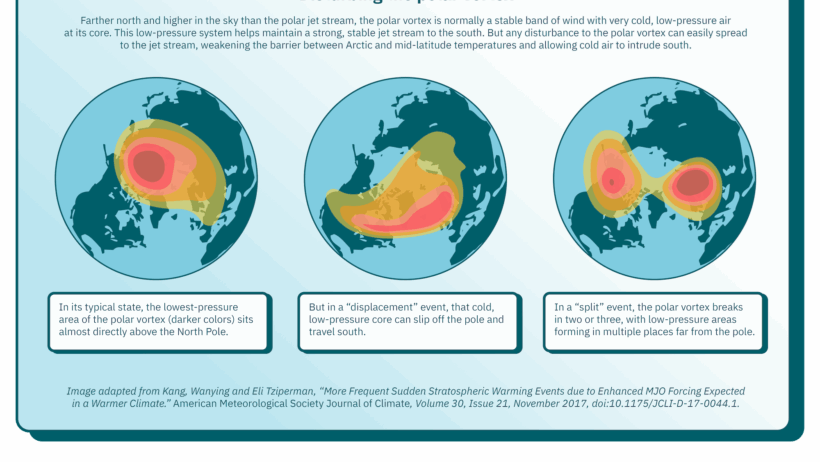
One of the most alarming aspects of the shifting polar jet stream is its contribution to severe weather events. For instance, a southward dip in the jet stream can lead to cold Arctic air plunging into temperate regions, resulting in record low temperatures. Conversely, a northward shift can draw warm air-masses into polar regions, exacerbating heatwaves. Such scenarios highlight the interconnectedness of global weather systems, wherein disturbances in one area can have cascading effects worldwide.
Climate scientists have noted a notable increase in the frequency and severity of these extreme weather events in recent decades. This surge is often correlated with the melting of Arctic ice, which diminishes the temperature contrast that fuels the jet stream’s strength. Melting ice impacts ocean currents and alters atmospheric pressure systems, further destabilizing weather patterns. The Arctic is warming at an alarming rate, which is anticipated to have a far-reaching impact on weather across the globe.
Moreover, the unpredictability accompanying a weakened polar jet stream contributes to longer-lasting weather anomalies, such as droughts or floods. For example, persistent high-pressure systems can trap air pollution and exacerbate poor air quality, leading to detrimental health effects for communities. This demonstrates that the implications of climate change extend beyond the environment; they also encompass public health, agriculture, and infrastructure.
In addition to temperature variances, the polar jet stream’s inconsistency can lead to shifts in seasonal weather patterns. Traditional representations of seasons are being obscured as unseasonal weather patterns become more commonplace. These perturbations can disrupt agricultural cycles, leading to crop failures in crucial food-producing regions. Farmers—and whole economies—can find their livelihoods jeopardized by unexpected frost or unanticipated rainfall.
Another facet of the polar jet stream’s weakness is its influence on precipitation patterns. Changes in the jet stream can exacerbate drought in some regions while causing extreme flooding in others. These irregular rainfall patterns disrupt water supplies and threaten ecosystems, further destabilizing food systems. They also heighten the competition over dwindling water resources, leading to potential geopolitical tensions.
Public awareness of the importance of the polar jet stream may lead to increased advocacy for climate action. Employing visuals like enhanced modeling and data visualizations can aid in illustrating the crucial role the jet stream plays in overall weather patterns. Public campaigns can emphasize the significance of mitigating climate change to restore balance to our atmosphere and stabilize weather systems.
Furthermore, understanding the dynamics of the polar jet stream extends into discussions about future climate policy. Policymakers can utilize climate projections involving jet stream behaviors to shape adaptive strategies for communities vulnerable to climate impacts. Investing in resilient infrastructure and sustainable agricultural practices is essential for weathering the storms of a changing climate.
In conclusion, the weaknesses of the polar jet stream present a crucial key to deciphering the chaos wrought by global warming. The destabilization of this atmospheric feature compels one to consider not only short-term weather variations but also long-term implications for ecosystems, economies, and human health. As the planet continues to warm at an unprecedented rate, the evidence suggests that the repercussions of a weakened jet stream will only intensify, necessitating immediate and concerted global effort to combat climate change. Addressing this challenge embodies the intersection of environmental stewardship, social responsibility, and proactive governance. The future of our weather—and indeed, our planet—depends on our collective response to these unfolding realities.