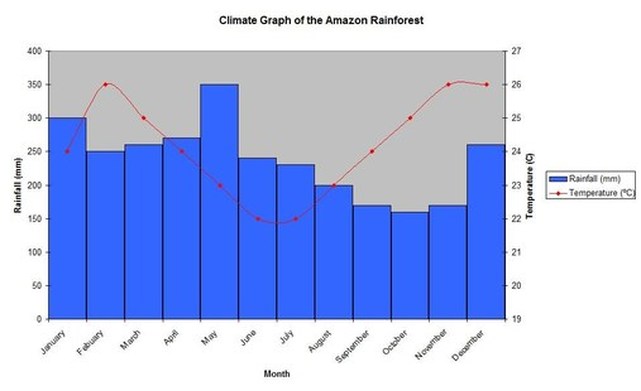

The Amazon Rainforest, a verdant expanse that pulsates with life and ecological significance, boasts a climate that is as dynamic as its biodiversity. Nestled within the equatorial region, this biome is distinguished not only by its lush canopy but also by its relatively stable average temperatures. However, beneath this facade of consistency lies a multifaceted nature that merits exploration. Understanding the average temperature of the Amazon Rainforest per month offers insights into its unique climate, guiding our appreciation of this ecological jewel.
First, let us embark on a journey through the Amazon’s climatology. The region experiences a tropical rainforest climate, characterized by high humidity, frequent rainfall, and warm temperatures. The average annual temperature hovers around 77°F (approximately 25°C). However, this is merely a tantalizing glimpse into the climatic tapestry woven throughout the year. Month by month, the temperatures fluctuate slightly, yet consistently, remaining within the warm embrace of the tropics.
January greets the rainforest with temperatures averaging around 78°F (26°C). This month heralds the onset of the rainy season, marking a shift towards increased precipitation. The lush rainforest teems with activity, as flora and fauna juggle the extremes of wet and dry. January’s showers invigorate the ecosystem, setting the stage for a vital cycle of growth and rejuvenation.
As we transition to February, the mercury gently climbs to about 79°F (26°C). The humidity lingers, creating a seemingly palpable essence in the air. It is in this month that one can witness the Amazon’s inhabitants—the myriad species of birds, mammals, and insects—engaging in their intricate dance of survival. The forest buzzes with fervor as plants absorb the moisture, propelling growth into overdrive.
March brings a slight rise in temperature, averaging around 79°F (26°C), but the allure lies in the complexity of weather patterns that emerge. By now, the rains are a staple, enhancing the rainforest’s emerald vibrance. Streams swell, exemplifying nature’s capriciousness, as animals adapt to the fluctuating availability of resources. One cannot help but marvel at the resilience embedded within this ecosystem, challenging our perceptions of vulnerability.
April sees temperatures stabilize at around 79°F (26°C), but it is also a pivotal month of transition. The Amazon often experiences periods of intense rainfall, leading to localized flooding. These events, while seemingly disruptive, play an essential role in seed dispersal and nutrient cycling. Witnessing this phenomenon ignites curiosity about the interconnectedness of life within the forest. Every droplet contributes to the rhythm of the rainforest, an orchestral arrangement of nature’s finest musicians.
May ushers in a marginal drop in average temperatures, averaging around 78°F (26°C). The relentless rain, however, continues, as humidity levels soar. This deluge influences various migratory patterns, affecting not only the animals’ habitats but also the agricultural practices of nearby communities. Herein lies a poignant reminder of how climate subtly governs life and livelihoods, intertwining humanity with the intricacies of nature.
As we delve into June, the temperatures remain steady, averaging roughly 77°F (25°C). The rains begin to recede, yielding to a mercurial climate rich in opportunities for exploration. Emphasis shifts to the extraordinary adaptations of species that depend on the cyclical nature of their environment. The wisdom of nature manifests through changes in behavior, feeding, and reproduction—all finely tuned to the cadence of the seasons.
July often presents a captivating paradox. With average temperatures around 77°F (25°C) and a significant reduction in rainfall, the rainforest seems to breathe, allowing patches of sunlight to penetrate through the emerald canopy. This brief respite invites a spectacular display of life, illuminating the vivid hues of thriving flora. It is during these moments that the rainforest unfolds its hidden gems, drawing in the curious observer keen on discovering its mysteries.
August echoes July’s climate, with temperatures lingering around 77°F (25°C), though humidity begins to creep back in as the month progresses. The resurgence of rains signals a period of renewal and emergence—a cycle that teeters between prosperity and challenge. As the ecosystem readies itself for increased rains, the delicate balance underscores nature’s resilience amidst adversities.
September unfolds with a climatic assertion, as temperatures hover around 78°F (26°C). Here, the rainforest flourishes anew, the once-parched soil soaking in the life-giving rains. The abundance fosters a vibrant tapestry, from the towering trees to the delicate flowers that attract a plethora of pollinators. The inherent interconnectedness of species shines brightly, emphasizing the essential role of each organism in sustaining the rainforest’s integrity.
In October, we witness temperatures edging slightly higher, averaging 79°F (26°C). This month epitomizes biodiversity as animals prepare for mating seasons and plants burgeon in response to the rejuvenating rains. The cacophony of sounds reverberating through the forest reaches a crescendo, capturing the essence of life itself. It invites us to ponder the metamorphosis occurring within this majestic realm.
November transitions into what many refer to as the peak of the rainy season. Average temperatures linger at approximately 79°F (26°C), yet the atmospheric shifts are palpable. The continuous downpours contribute to higher humidity levels, which, in turn, impact the behavior of many species. One can gain insight into the elaborate dance of adaptation that defines the inhabitants of this enchanting biome.
Finally, December arrives, sealing the cycle of months with an average temperature of 78°F (26°C). The rainforest’s resilience is on full display as flora and fauna take a collective breath before shifting again. Sustainability thrives on the delicate balance of temperature and precipitation, a testament to the ancient wisdom of nature.
In conclusion, the average temperatures of the Amazon Rainforest, while seemingly mundane, unravel a profound narrative of survival and interconnectedness. Each month, imbued with its unique characteristics, invites a deeper understanding of the ecological masterpiece that is the Amazon. This rainforest, thriving under warmth and saturation, is a testament to the resilience of life, beckoning us to cherish and protect its intricate beauty.