


The Sahara Desert, an expanse of stark beauty and formidable challenges, teems with life in its own unique manner. While often perceived as an inhospitable wasteland, this arid environment is replete with intricate food chains and diverse ecosystems that showcase the resilience of nature. As one delves into the consumers populating the Sahara, an intricate tapestry of relationships unfurls, painting a portrait of survival, adaptation, and interdependence.
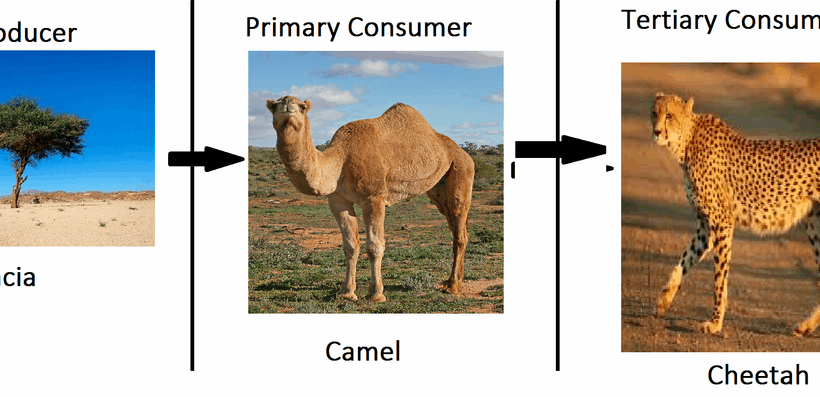
To grasp the nuances within the Sahara’s food chains, it is essential first to delineate the three primary categories of consumers: primary consumers (herbivores), secondary consumers (carnivores), and tertiary consumers (top predators). Each group plays a pivotal role in maintaining the balance of the ecosystem, influencing everything from vegetation growth to population dynamics.
Starting at the base of the food chain, primary consumers are the herbivorous inhabitants that sustain themselves on the sparse vegetation found in the Sahara. These organisms, ranging from small rodents to larger ungulates, are adept at navigating the extreme climate. The behavior of these herbivores not only reflects their adaptability but also elucidates their significance in the ecosystem. For instance, the desert-dwelling addax antelope is renowned for its remarkable ability to endure prolonged periods without water, subsisting on the scant foliage available. This adaptation allows it to flourish where other species may falter, thus becoming a crucial consumer in the overarching narrative of the desert’s ecology.
Moreover, other primary consumers, like the ibex and various rodent species, contribute to a delicate equilibrium, grazing on the sparse vegetation that punctuates the desert landscape. Their feeding habits promote the regeneration of plant life, effectively invigorating the biosphere. Without these herbivores, a cascade of ecological consequences would ensue; punctuated by destabilized plant communities and disrupted predator-prey interactions.
Transitioning from primary consumers, we encounter the secondary consumers—carnivorous species that prey on herbivores. The Sahara is home to a myriad of predatory mammals and reptiles that occupy this critical niche. The iconic sand fox, for instance, exemplifies the adaptability of these secondary consumers. By exploiting the nocturnal lifestyle, this creature minimizes the effects of the desert heat, hunting during the cooler hours for small mammals and birds. Likewise, the inclusion of various snake species, such as the horned viper, further enriches this tier through their unique predation techniques.
The dynamic interplay between herbivores and their predators underscores the concept of trophic cascades, wherein the interactions between species dictate the overall health of the ecosystem. An increase in the population of herbivores, for example, can lead to overgrazing, ultimately diminishing the flora required for their survival. Conversely, a healthy population of secondary consumers ensures that herbivore numbers remain stable, allowing vegetation to thrive.
Ascending the hierarchy, the tertiary consumers consummate the chain as the apex predators of the ecosystem. These formidable beings, such as the elusive North African cheetah and the adaptable golden eagle, command respect within their environments. Their role extends beyond mere predation; they are custodians of balance and stability, ensuring that neither herbivores nor smaller carnivores proliferate unchecked. It is a precarious balance, one that underscores the fragility of the desert’s ecosystems.
What is particularly striking about the Sahara’s consumers is their interdependence and adaptability. The various species have evolved a wealth of survival strategies, from physiological traits to behavioral adaptations, all aimed at thriving in an environment characterized by scarcity. For instance, many herbivores have developed migratory patterns, following the seasonal availability of foliage and water. In contrast, some predators have honed exceptional camouflage and stealth, enhancing their hunting success, even in the most challenging of conditions.
As climate change continues to shape the contours of our planet, the dynamics within these food chains are threatened. Rising temperatures and erratic precipitation patterns could disrupt these delicate relationships, leading to potential extinctions and ecosystem collapse. The shifting sands of the Sahara may be reshaped not just by the elements but also by the choices humans make today. Conservation efforts must embrace a more profound recognition of these intricate biological ties, promoting sustainable practices that preserve both the flora and fauna of this majestic desert.
The stories of the Sahara’s consumers compel us to reframe our understanding of this environment as one not solely defined by its challenges but also by its stunning resilience. It amplifies the message that every creature, from the tiniest rodent to the regal eagle, plays an integral part in the narrative of survival. Educating about these ecosystems, fostering empathy for their inhabitants, and implementing protective measures are imperative steps we must take to ensure the vitality of such wondrous life.
In conclusion, the consumers of the Sahara Desert—a complex web of herbivores, carnivores, and apex predators—exemplify the elegance of ecological relationships. By examining these interactions, we not only gain insight into the mechanisms sustaining life in one of the world’s most hostile environments but also cultivate a deeper appreciation for nature’s incredible ability to adapt and flourish against all odds. In understanding and valuing these consumers, we must also advocate for their preservation, recognizing that the health of their ecosystems is intimately tied to our own existence.