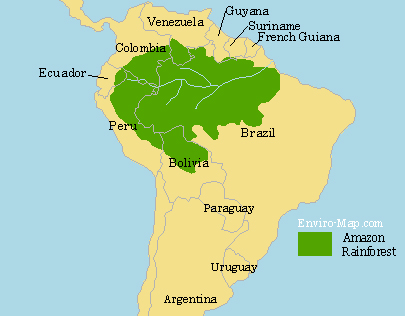

The Amazon Rainforest, a vast and intricate tapestry of life, sprawls across multiple South American countries, primarily Brazil, Peru, Colombia, Venezuela, Ecuador, Bolivia, Guyana, Suriname, and French Guiana. This biodiverse wonder, often referred to as the “lungs of the Earth,” offers not just a habitat for countless species, but also plays a critical role in global climate regulation. Understanding its location and geography is essential for grasping the immense ecological significance it holds.
The Amazon Basin, where the rainforest is situated, covers approximately 2.7 million square miles, making it the largest rainforest on the planet. To put that in context, it is roughly the size of the contiguous United States. Classification of the Amazon is complex, as it extends across various climate zones, predominantly classified as tropical moist forest. This unique environment is characterized by an abundance of rainfall, averaging between 60 and 120 inches per year, which fuels a rich diversity of flora and fauna.
The geographical expanse of the Amazon Rainforest can be mapped visually, showcasing its majestic rivers, towering mountains, and lush greenery. The Amazon River, the lifeblood of the ecosystem, weaves through the heart of the forest. Spanning about 4,345 miles, it is the second-longest river in the world, only surpassed by the Nile. As it flows, it absorbs and disperses water from tributaries, creating a complex hydrological system that nourishes surrounding environments.
Locally, the topography of the Amazon is predominantly flat, with some undulating hills. However, the Andes Mountains to the west serve as a striking contrast. These mountains not only act as a barrier that influences weather patterns but also contribute to the region’s rich biodiversity. The convergence of these mountains with the rainforest creates unique microclimates that foster various ecosystems within the Amazon itself.
A significant aspect of the Amazon Rainforest’s geography is the soil. Historically, the perception of the rainforest’s soil has been erroneous; it isn’t particularly fertile. The humid, tropical conditions lead to rapid decomposition of organic materials, resulting in nutrient-poor soils. Nonetheless, the diverse plant life has adapted to these conditions, developing intricate root systems that allow them to thrive and maintain the ecological balance.
The ecological dynamics within the Amazon are astounding. An estimated 390 billion individual trees, comprising roughly 16,000 different species, call the rainforest home. Among them, the mighty Brazil nut tree, the towering kapok, and numerous palm species stand out not just for their size, but also for their contributions to the rainforest’s intricate ecosystem. The interdependence of flora and fauna creates a remarkable web of life, with every organism playing a pivotal role in maintaining ecological integrity.
Furthermore, the Amazon Rainforest is home to an alarming number of animal species. It is estimated that around 2.5 million different species of insects, plants, birds, and other wildlife thrive here. Iconic species such as the jaguar, the Amazon river dolphin, and the sloth populate this expansive biome, highlighting the biodiversity that exists within its confines. Many of these species are endemic, meaning they cannot be found anywhere else on Earth, showcasing the utmost importance of preserving their habitats.
Geographical features of the rainforest extend beyond simple plant and animal life. The myriad indigenous communities that inhabit the Amazon possess a profound relationship with the environment. These tribes, numbering in the hundreds, maintain their traditional lifestyles intertwined with the forest. They rely on its resources for sustenance and medicine, embodying a knowledge of the ecosystem that is invaluable for conservation efforts.
Moreover, the socio-economic dimensions of the Amazon are increasingly intertwined with global dynamics. Deforestation, driven by agricultural expansion, logging, and mining, presents a profound threat to its sustainability. The geographic layout also plays a role; the accessibility of certain regions has spurred development, often at the forest’s expense. Balancing economic pursuits with environmental preservation remains a challenge that requires critical attention and innovative solutions.
The changes occurring in the Amazon Rainforest highlight a nuanced narrative. Satellite imagery and geographical mapping technologies provide crucial data, revealing the scale and speed of deforestation, while also underscoring the collective responsibility to address these pressing issues. Interactive maps showcase the real-time impact of human activities, allowing for an engaging exploration of the forest’s geography while making the urgency of conservation evident.
Understanding the location and geography of the Amazon Rainforest provides us with a deeper appreciation for its complexities and its irreplaceable role in our planet’s health. It is a region defined by its vibrant ecosystems, rich cultural heritages, and a delicate balance that hangs in the balance. As the world faces unprecedented environmental challenges, recognizing and advocating for the preservation of the Amazon is more crucial than ever.
In summary, the Amazon Rainforest is not merely a geographical location; it is a vital component of Earth’s ecological framework. Its elements—rivers, trees, wildlife, and indigenous cultures—combine to form an intricate system that demands respect and protection. The current and future state of the Amazon will undoubtedly reverberate through ecosystems and communities around the world, making its preservation not just a regional concern, but a paramount global necessity.