
The Green Revolution, that extraordinary metamorphosis in agriculture, was not just an event but a renaissance, an awakening driven by the confluence of human ingenuity, scientific exploration, and a dire need to feed a burgeoning population. As the earth’s soil, akin to canvas, was painted with the brushstrokes of innovation, several key inventions emerged, revolutionizing the agricultural landscape. Herein, we delve into four pivotal innovations that catalyzed this transformation, each an intricate thread woven tightly into the vibrant tapestry of modern farming.
1. High-Yielding Varieties (HYVs): The Seeds of Change
At the heart of the Green Revolution lay the introduction of high-yielding varieties (HYVs) of staple crops, such as wheat and rice. Picture a world where each seed encapsulated potential beyond imagination. These genetically enhanced seeds, akin to athletes trained for Olympic glory, were remarkably more productive than their traditional counterparts. They were designed to respond magnificently to better farming practices, including the judicious application of fertilizers and irrigation.
The scientists behind these breakthroughs, often adorned with lab coats and the fervor of fervent inventors, worked tirelessly in breeding centers from Mexico to the Philippines. They forged hybrids that housed increased resistance to pests and diseases, ultimately ensuring a higher survival rate in this increasingly competitive environment. This marked the dawn of agricultural practices fettered by traditional norms—yielding not just crops, but hope. As farmers embraced these seeds, they became harbingers of abundance, sowing the groundwork for food security that had previously seemed an elusive goal.
2. Chemical Fertilizers: Nourishing the Earth
As crops sprouted from the soil like aspirations, their thirst for nutrients became the next frontier. Enter chemical fertilizers, the alchemical conjurations that enabled farmers to nourish their land with precision and potency. These synthetic marvels—urea, phosphates, and potash—provided an arsenal of essential nutrients to the crops that lay in eager anticipation. In many ways, they transformed the minimalist approach of organic farming into a science steeped in creativity and calculation.
Imagine these fertilizers as the very breath of life that invigorated parched crops, compelling them to reach skyward in a fervent quest for the sun. With each granule spread across fertile fields, a dialogue began—a conversation between earth and farmer, mediated by science. In places where nutrient-deficient soils once stifled agricultural growth, these fertilizers unleashed a veritable explosion of green, flowering into farmers’ expectations of bounty and prosperity. However, this love affair with chemical fertilizers was not without its complexities. The delicate balance required between feeding the earth and safeguarding the environment unfurled a narrative of consequences that would echo through time.
3. Irrigation Techniques: Harnessing Water’s Power
In the realm of agriculture, water is the relentless current that shapes livelihoods. The advent of advanced irrigation techniques, from high-tech sprinkler systems to drip irrigation, stood as a testament to humanity’s ingenuity in harnessing this essential resource. Consider it an orchestra conducting an elemental symphony, where each drop is a note in a grand composition, creating harmony between nature’s cycles and human demands.
These methods allowed farmers to wield the power of water with unprecedented precision. Gone were the days of relying solely on erratic rains; farmers began to orchestrate irrigation systems that transformed drought-laden fields into lush gardens. This revolution, however, brought intricacies to the forefront. As land transformed from arid adaptability to a lush bounty, the question loomed: Who controls this liquid gold? The implications of water access morphed into a new narrative—one that entwined socio-political dilemmas with agricultural practices. The Green Revolution thus became not merely a story of increased yield but one that embroiled communities in discourse over resource allocation and sustainability.
4. Mechanization: The Mechanical Heartbeat of Agriculture
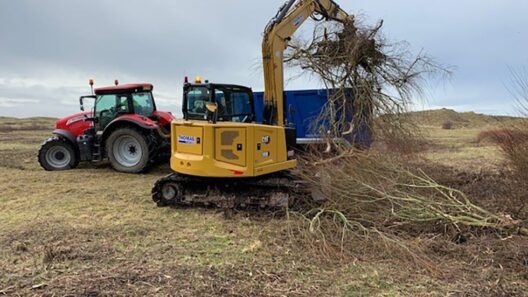
As the elements of nature aligned with scientific breakthroughs, mechanization surged forward, forever altering the landscape of farming. With the mechanized heartbeat of tractors and harvesters, agriculture transitioned from an arduous, labor-intensive endeavor to a streamlined industrial process. One can envision the fields, once echoing with the song of manual labor, now humming with the efficient whir of machinery that accelerated productivity.
This tectonic shift was not only transformative in terms of time-saving but also enhanced the methods through which crops were cultivated, tended, and harvested. Farmers who had once labored for hours under the sun could now cover more ground and nurture larger expanses of land. This newfound efficiency came at a cost, however—transitional challenges lurked in the shadows. An ever-looming question arose: how could smallholder farmers compete in this evolving landscape? The mechanization of agriculture reshaped economies, straddling the line between opportunity and inequity, ultimately painting a complex portrait of progress.
In summation, the Green Revolution was a remarkable episode in agricultural history, charting a course towards innovation that sparked human creativity and scientific advancement. The high-yielding varieties, chemical fertilizers, advanced irrigation techniques, and mechanization forged an intricate web that attempted to tether food production to the spiraling demands of a growing populace. However, scattered amidst the bounty are threads of caution, demanding reflection on the sustainability of such advancements. As we gaze ahead, toward the horizon of agricultural practices yet to be conceived, let us learn from this historical tapestry—a delicate balance of innovation and environment awaits us.